Floors Built to Handle Water Exposure
Bathroom Flooring Installation in West Norriton for moisture damage, outdated materials, and surfaces that fail in high-humidity environments
Bathrooms generate constant moisture from showers, sinks, and humidity, conditions that cause standard flooring materials to warp, stain, or develop mold if not properly selected and installed. Bathroom flooring must resist water penetration, provide secure footing when wet, and tolerate cleaning agents without deteriorating. FORGE Renovation Group installs waterproof flooring in West Norriton bathrooms using porcelain tile, ceramic tile, or luxury vinyl plank designed specifically for moisture-prone areas, with subfloor preparation that prevents future buckling or adhesive failure.
Flooring installation begins with inspecting and repairing the subfloor to remove any sections damaged by prior leaks, confirming that the surface is level and structurally sound before new materials are laid. Waterproof membranes or backer boards are installed over wood subfloors to create a moisture barrier, and tile or vinyl is set using adhesives formulated to maintain bond strength in wet conditions. Grout joints in tile installations are sealed to prevent water from reaching the substrate, and vinyl planks are installed with interlocking edges or waterproof adhesive that prevents seepage between seams.
Schedule a property evaluation to assess subfloor condition and discuss flooring materials suited to your bathroom layout and moisture exposure.
What You Notice Once Waterproof Flooring Is Finished
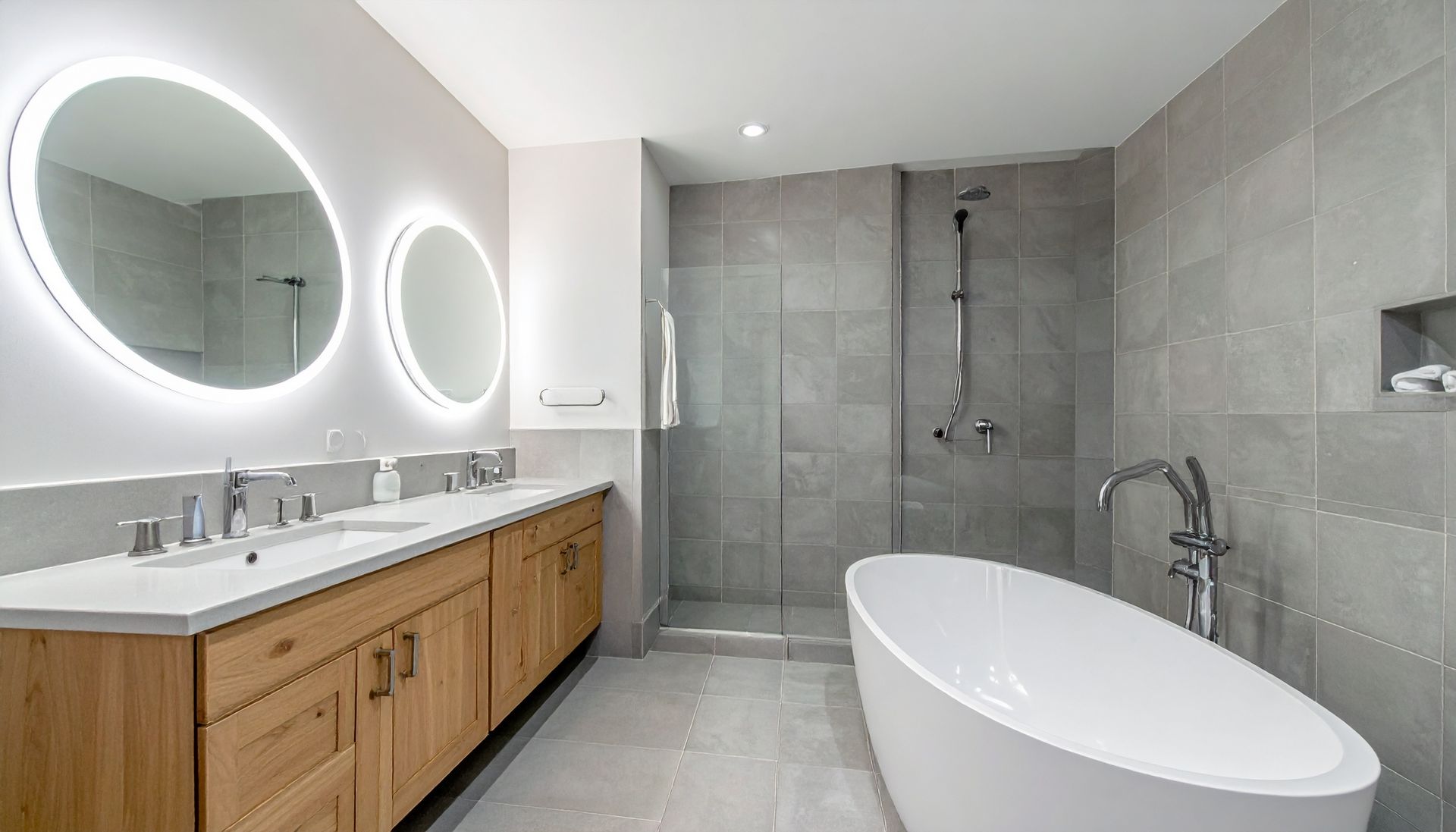
Porcelain and ceramic tiles provide hard, non-porous surfaces that repel water completely and resist staining from cosmetics, cleaning products, or mildew. Tile installations require setting each piece in thinset mortar with consistent spacing, grouting joints once the mortar cures, and applying sealer to grout lines to prevent moisture absorption and discoloration over time. Luxury vinyl plank flooring offers waterproof performance with a softer, warmer surface underfoot, available in wood-look and stone-look designs that install more quickly than tile and require no grout maintenance.
After installation, you notice flooring that remains flat and secure without buckling near showers or tubs, surfaces that dry quickly without retaining water in low spots, and materials that resist the mold growth and odor common with inadequate moisture protection. Tile floors provide a durable, long-lasting surface that tolerates heavy use and cleans easily, while vinyl plank floors deliver similar water resistance with added comfort and faster installation timelines. Both options outperform laminate, hardwood, or standard vinyl in bathroom environments where water exposure is frequent and unavoidable.
Material selection depends on budget, desired appearance, and underfoot feel. Porcelain tile costs more upfront but offers the longest lifespan and highest resale value, while luxury vinyl plank provides excellent performance at a lower cost with easier replacement if damage occurs. Subfloor preparation is critical regardless of material choice, as uneven or weakened substrates cause tiles to crack and vinyl to telegraph imperfections through the surface layer.
What Homeowners Ask About Bathroom Floors
Questions about bathroom flooring typically focus on material performance, installation requirements, and how to prevent the moisture damage common in improperly prepared installations.
What makes porcelain tile better suited to bathrooms than ceramic?
Porcelain tile has a lower water absorption rate than ceramic due to denser composition and higher firing temperatures, making it more resistant to cracking from freeze-thaw cycles and less likely to harbor moisture that leads to mold growth. Both work in bathrooms, but porcelain offers superior long-term durability.
How is the subfloor prepared before waterproof flooring is installed?
Subfloors are inspected for rot, sagging, or water damage, with compromised sections removed and replaced. The surface is leveled using self-leveling compound if needed, and waterproof membranes or cement backer board are installed to protect wood substrates from moisture exposure during the life of the floor.
What are the maintenance differences between tile and luxury vinyl plank in bathrooms?
Tile requires periodic grout cleaning and resealing to maintain water resistance, while luxury vinyl plank needs only routine cleaning with no grout maintenance. Both resist water equally well when installed correctly, but vinyl offers simpler upkeep and a more forgiving surface if items are dropped.
When should bathroom flooring be replaced rather than cleaned or refinished?
Replacement becomes necessary when water has penetrated the subfloor and caused structural damage, when tiles have cracked and grout has failed to the point where water reaches the substrate, or when flooring materials were not designed for wet environments and have begun to warp, discolor, or support mold growth.
How does West Norriton's climate affect bathroom flooring choices?
Seasonal humidity fluctuations require flooring materials that remain dimensionally stable across moisture level changes. Porcelain tile and waterproof vinyl plank both tolerate these conditions without expanding or contracting, unlike hardwood or laminate that can buckle when exposed to high humidity common in bathrooms.
FORGE Renovation Group installs bathroom flooring with proper subfloor preparation and waterproofing to prevent the moisture-related failures that shorten floor lifespan. Request a detailed estimate based on your current floor condition and material preferences.